
Washing Cloth Diapers

by Maria on February 29, 2012

in Cloth Diapering,Detergents,Stripping,Washing

I almost didn’t post this since cloth diaper washing/detergent posts have been everywhere lately. However, since I’ve been thinking about this for 2 years, and working on it seriously for about 6 months, I’m posting it anyway!

I spent the first 6 months of my cloth diapering stint trying to figure out a wash routine. I had seen all the charts that told you which detergents were “safe” and which would cause your diapers to spontaneously combust (kidding.) I spent countless dollars and hours on detergents & stripping. What finally saved me was a detergent with pretty much all the “no-no” ingredients. Then I started to realize that all these companies said these detergents would damage your diapers, but did they really know? Some companies actually recommended the mainstream, “no no” detergents, saying enzymes were necessary to get your diapers cleaned.

I wondered, had anyone actually washed diapers in different detergents under controlled conditions? Before a company could justify voiding a warranty based on detergent, I would think they should have: washed 18 diapers at a time, every 3 days for whatever the typical life expectancy on their diaper is, checked after every 10 or so washes, Oh, and they would need to do this in soft water, hard water, top load HE, from load HE and standard top loading machines. Chlorinated city water & well water, with and without a water softener, and in different brand machines. Yeah. Too expensive and too much work.

So I thought the next best thing would be a database of actual user experience, rather than a star rating based on ingredients & conjecture. This was the basis of my cloth diaper detergent survey. In hindsight, I should have asked more yes/no and/or multiple choice questions, so I could let Google docs summarize for me and make assumptions based on that. Instead, I did lots of “fill in the blank” type questions so respondents could tell me more. This means I had to read a zillion responses. :-)

My ultimate goal is to analyze & compile the data based on what is most and least likely to work in different water & washer conditions. Hire a programmer to create an SQL database so I can enter the data, then allow users to select one more options (water type, washer type, detergent type) and see a list of what is and isn’t likely to work for their situation. Unfortunately I don’t have the time or money to invest right now, but still hope to do so in the future.

For now, I just wanted to share with you what I learned, and what surprised me the most is that nothing surprised me! I’ve been cloth diapering for about 2 1/2 years (which is peanuts compared to people who have cloth diapered for a decade or more) and it seems that my experiences and conclusions about detergents, wash routines, stripping & additives are nothing unique. I have not “scientifically analyzed” the results, this is simply a summary based on sorting and reading survey results.

94% of respondents report no damage to their diapers
. Those who selected “yes” for damage to their diapers were unsure as to whether the leaking, repelling, fraying, delamination etc. was due to detergent. Less than 1/4 of those people were using a “no-no” mainstream detergent. The remainder were using detergents that are recommended on “the lists” etc.

What do I do with a diaper when I change it?

If your baby is breastfed, simply store until wash day. Otherwise, shake solids into the toilet & store. Optionally, you can use a diaper sprayer on difficult to remove solids. You can use a kitchen size trash can with a liner or a zippered wet bag to store dirty diapers. I find that smells are minimized by leaving your pail open a crack. I prefer to remove pocket inserts as I put them in the “pail” so I can shake the whole thing into the washer without having to touch them again.

How often do I wash & how many do I wash at once?

Every 2-3 days is optimal. 18-24 diapers in each load works well; they need room to move around, but also need to agitate against each other to get clean. Washing less often may leave you with too many diapers to wash at once, and it may be more difficult to get them clean after they have been sitting.

How do I wash them?

The most common successful wash routine is a rinse (warm if your washer has it) followed by a hot wash (with detergent) and a double rinse. In a standard washer use a larger load size than you need. In an HE washer, add a wet towel to the load to trick your washer into adding more water.

61% of survey respondents have standard top load machine, 33% have a front loading HE and 7% have a top load HE.

machine type

Should I add anything to the wash?

Commonly used additives included Biokleen Bac Out, baking soda, bleach, Borax, Oxiclean, Crunchy Clean Oxygen, vinegar, tea tree oil, washing soda and Calgon. Use caution and only use when necessary. The most successful wash routines are the simplest!

Do I need to “strip” my diapers?

diaper stripping

49% of respondents to strip their diapers, even if their detergent is working well. 40% don’t strip, and 11% selected “other.” People strip because of microfiber stink, ammonia smell, repelling and other issues. Some people commented that they didn’t necessarily need it but didn’t think it would hurt, or were seeing if it would help with baby’s rash, thought it was a good idea since they shared a washer, were stripping preventively and so forth. “Stripping” varies from a soak and/or extra rinses, to some bleach, Calgon, dawn or similar added occasionally.

What detergent works best?

formula

73% of survey respondents use powder detergent, 27% use liquid and a few use soap nuts.

Finding the detergent that works for you is trial and error based on your washing conditions, but many people with very hard water have great results with Rockin’ Green. It seems that RnG either works marvelously or doesn’t work at all (several reported that it worked initially, but led to stink & repelling.) All Free & Clear, Arm & Hammer, Charlie’s Soap, Crunchy Clean, Country Save, (these 5 seem most commonly used with top loading standard machines) Eco Sprout, Ecos, Eco Nuts, Tiny Bubbles and homemade detergent were most commonly used successfully by survey respondents. (There were others, but for now I’m listing only those which appeared more than a handful of times.)

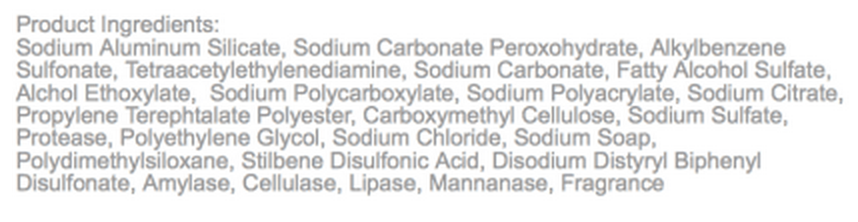
The most successfully used standard detergent is Tide. Overwhelming numbers of families with all water & washer types have great results with it. I realize many want to avoid the chemicals it contains, and no, we’re not sponsored by P&G in any way! :-)

What are the most common water types?


50% of survey respondents have hard water, 19% have soft and 31% are “other” (don’t know, average, varies etc.) 12% have a water softener.

Rockin’ Green, Tide, Eco Sprout, Country Save, Crunchy Clean, Charlie’s Soap, Arm & Hammer & All are often reported as working well with hard water.

Rockin’ Green classic or soft rock, Tide, Country Save, Crunchy Clean, Arm & Hammer and All are often used successfully by people with soft water.

Tide powder ingredients (PDF) include water softeners while Tide liquid ingredients (PDF) do not. You can logically assume that the powder may work better for hard water, while the liquid might rinse out more cleanly in soft water. That said, I have a water softener and use powder with no trouble.

How much detergent do I use in my machine?

This is also trial & error & varies based on your washer, water, and how many diapers you’re washing. I recommend starting with the lowest load line, using a bit more for harder water. If your diapers aren’t coming out smelling clean, up the amount a bit. If you are having to do too many rinses to get the suds out, cut back a bit. Generally, you should be using 1/2 the lowest load line or more (possibly less in some cases.) It’s very rare that a miniscule amount will get diapers clean.

If you want to know all about the science of laundry, check out Bummis Laundry Science.

Do any of the survey results surprise you?

Information is based on opinion & survey results. Change-Diapers.com is not liable for any damage or injury that may arise from your diaper washing routine!

{ 14 comments… read them below or add one }

1 christine jessamine February 29, 2012 at 9:56 am

thank you for the information. i haven’t started cloth diapering just yet, but this has been very usefull for when i do start

Reply

2 Kassie @ Mommy to a Little Lady{bug} February 29, 2012 at 12:57 pm

Thanks for this article. I get so overwhelmed sometimes with the contradictions of the large diaper companies. It’s nice to see a comparison of what real mamas are trying.

Reply

3 Myah March 13, 2012 at 8:59 am

The results of this survey are wonderful. I have a 9-year-old girl, who we used disposable diapers and wipes on as a baby and toddler. I tried cloth for about a week when she was first born, but was so overwhelmed that I gave it up. (I was using pre-folds and a waterproof bloomer.) This time around (currently pregnant), we’d like to use cloth if we can hack it! In doing research, it’s tough to figure out exactly how we’ll go about the “messy” reality of cleaning diapers easily and effectively. Your site is great for getting information. Thanks so much for your time and effort in making all of our lives easier!

Reply

4 Jenny Vater March 20, 2012 at 9:17 am

This is great info. One of the most informative posts I have read on the web about cloth diapering. I was surprised by the use of bleach. And no mention of drying diapers in the sun.

Reply

5 Maria March 20, 2012 at 10:32 am

Hanging diaper in the sun is a great way to fade or eliminate stains. I use clothes pins to hang mine from the wire shelf above my W&D, others use a wooden drying rack, and some toss theirs in the dryer every time with no issues. :-)

Reply

6 S. Harmon April 24, 2012 at 9:16 pm

These results really weren’t surprising. If you look into WHY “no-no” ingredients ARE “no-no” ingredients, it usually is because of the desire to go greener/use less chemicals, or avoid possible baby bum irritations. Of course, soap and fabric softener do leave behind eventually water-repelling residue on cloth, causing a need for stripping, but other than that and disinfecting chemicals (i.e. bleach) that we all know are harsh on any piece of clothing, most “no-no” ingredients have less to do with diaper wear and more to do with crunchiness or baby’s sensitive skin.

Reply

7 S. Harmon April 24, 2012 at 9:33 pm

I should add that, for myself, I still prefer using a plain surfactant rather than detergent with enzymes also, or any other added chemicals / unnecessary ingredients. I have fairly sensitive and eczema-prone skin and I am not sure if it is just the placebo effect or not, but I like it better. I also do not usually cause heavy soiling or stains on my clothes, though.

For my HUSBAND’s laundry, on the other hand, I still use traditional surfactant and enzyme, stain-eating, stain guarding, disinfecting detergent as needed (frequently) because he is worse than a toddler when it comes to dirtying his clothes, and his skin is not sensitive at all.

I do not have any experience with cloth diaper laundry specifically, as the baby does not need any diapers in utero! ;) But I know that there are good cleaning agents out there that can still be gentle on skin, especially with rinses if my baby has sensitive skin, but not so much as I do.

Basically I was just trying to say that everyone is different–their family routines, their skin, their crunchiness–and so they really should not just rule things out that people tell them not to get without looking into why. If you agree, follow; if you do not, lead.

Reply

8 angela May 1, 2012 at 4:35 pm

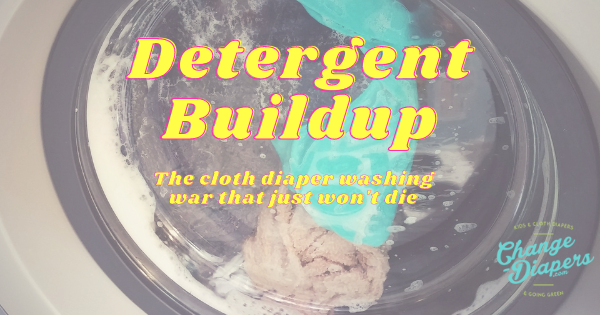
what brand is the pirate printed diaper up there in the washing machine picture?!?!

Reply

9 Maria May 1, 2012 at 4:44 pm

It looks like a side snapper, so that makes it Wee Bonnie Botts (http://change-diapers.com/2010/10/wee-bonnie-botts-aio-review-giveaway-discount-closed-1026/). I also have a Heartland Dreams in that print! (http://change-diapers.com/2010/03/heartland-dreams-fitted/)

Reply

10 Elisa June 14, 2012 at 5:54 pm

I JUST started CDing today!! and was nervous about the whole washing business since theres so many do’s and don’ts out there. Thank you for your post! I’m actually looking forward to having to wash my first load!
Elisa

Reply

11 Maria June 14, 2012 at 10:17 pm

So exciting!! Please get in touch with me if you need any help at all!

Reply

12 Vickie Couturier July 12, 2012 at 11:16 am

wow,thanks for this ,has some great ideals,my daughter in law will be using cloth diapers so ill have her read thi

Reply

13 AlannaB February 26, 2013 at 6:51 pm

I was surprised by the amount of respondents who stripped their diapers even if their detergent was working well. For the first couple of years of cloth diapering, I never stripped my boys cloth diapers, but when my family and I moved to our current location, we struggled with EXTREME hard water for the first time and dealt with detergent issues, so I started stripping the cloth diapers about once per month. If I could do without the whole stripping process, I surely would!

Reply

14 Maria February 26, 2013 at 6:59 pm

I think so many people start out with all these detergent fears, that they end up stripping because they are not washing properly!

Reply

Leave a Comment

{ 7 trackbacks }

Previous post:

Next post: